Last week was about looking inward; this week, we shift to the bigger picture. I’ll admit, I used to treat “ethics” and “sustainability” as hollow tech-speak or just another buzzword. I was wrong. This week has shown me that these concepts are the “make-or-break” guardrails of Information Systems. When integrated into strategic IS decisions, they transition from abstract ideals to survival requirements. This raises an important starting point: How do we define strategic IS decisions in today’s landscape?
The Bigger Picture
Before we get into that, we need to look at the bigger picture of what an IS strategy actually is. Essentially, it’s about digital enablement. Deciding how digital tools can create, support, or totally transform a company’s competitive advantage. At its heart, it’s about using those capabilities to reshape what an organisation is capable of.
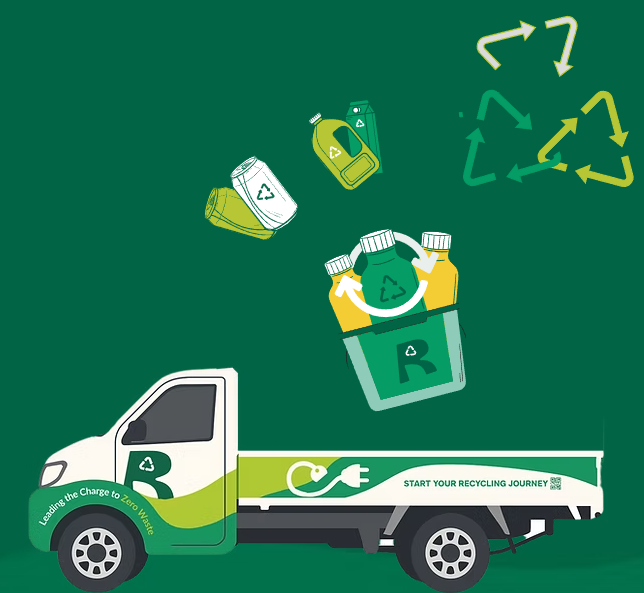
With that in mind, a strategic IS decision is the moment high-level plans are put into practice. The kind of plans that affect the entire value chain. In a similar vein to the exercise we did in class this past week, I’m going to use one business to help explain my understanding. Regenize. [image] I think their story is a perfect example of strategic IS decisions.
Doing things faster, cheaper, and with fewer resources. An example of this would be AI automation. It’s great for cutting out the middleman to save time and money, though it often raises some serious ethical questions about the people it’s replacing.
Pushing boundaries and using cutting-edge tech to create new opportunities. My favourite recent innovation is the digitising of scents using AI and IoT.. You can read more about it here or here
This covers the “buzzwords” I mentioned earlier (ethics, sustainability, etc). Essentially, we want to make sure our innovations don’t harm the planet. In simpler terms, it’s about the triple bottom line, balancing our profits with people and the planet
This is about ensuring everyone has access to technology, not just the people who can afford the latest devices. I will dive into this a bit more when I talk about regenize.
Where The Tensions Rise
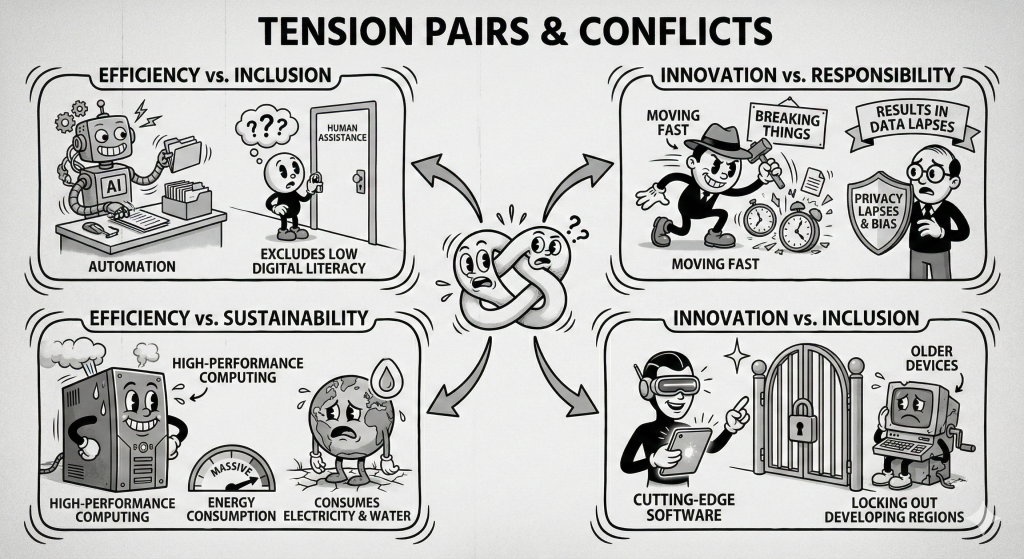
The tricky part is that these four categories push and pull similarly to how the iron triangle works. To make it easier to see how these clash, refer to the AI-generated image below.
As you can see, choosing ‘faster and cheaper’ often means exclusion in some form. This is exactly what makes strategic IS decisions so high-stakes
Now, on to Regenize. In November 2025, I had the privilege of taking part in the UWC x HNU hackathon, where I first learnt about Regenize. They are the perfect case study because their business model is the textbook definition of a strategic IS decision. They use a digital platform to connect informal waste collectors with residents that are recycling. This decision creates some immediate real-world trade-offs that we will explore below.
Efficiency vs Inclusion (Their App)
While a high-tech app is efficient for a business, it can be a massive barrier to inclusion. If a recycling company builds a high-tech app that only works on the latest smartphones and requires a high-speed data connection, they might be “efficient” on paper, but they’ve failed ethically. They’ve excluded the very informal waste collectors who are the backbone of the industry.
They navigated this by providing the informal waste collectors with smartphones and uniforms. They invested in their infrastructure to make sure their core users weren’t excluded.
Innovation vs Responsibility (Rewards System)
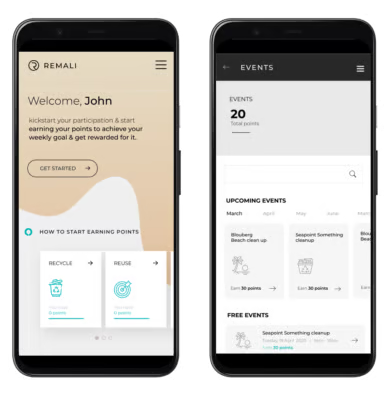
Regenize uses gamification of sorts, where they reward users with a fixed amount of their digital currency once a week. This digital currency (Remali) can be redeemed at Spaza shops for essentials such as airtime, bread, milk, etc.
Tension arises in this matchup when you think about how they need to navigate tracking waste data without being intrusive. Furthermore, how do you ensure the digital currency has and holds real value?
By making remali redeemable for essentials, they turned a digital innovation into a CSR win, directly addressing the triple bottom line
Sustainability vs Efficiency
For an organisation, it would be way more efficient to have one big truck pick up everything. But for a company that depends on the community, it’s not sustainable.
The way they navigated that is by creating decentralised hubs. They traded off the efficiency that would come with a central location and chose a model that creates local jobs and reduces carbon emissions by providing collectors with bicycles/electric vehicles.
This shows that if they went for pure efficiency, they would lose their collectors. However, if they ignored their innovation, the company wouldn’t grow. It proves that navigating these trade-offs isn’t about choosing a path but rather about finding a sweet spot.
My Thoughts
To navigate these trade-offs, organisations should ask themselves who their innovation leaves behind. There is no point in being on the cutting edge of technology, if your target is now priced out of the product/service.
Think about the companies on the BDS boycott list. If we stripped away the ‘efficiency’ and ‘innovation’ of the tech we use daily, would there be enough ‘responsibility’ left to keep the system standing?
Song of The Week: Terrapin - Clairo
Click to listen
A jazzy track for staring into the distance. A reminder that the most strategic thing you can sometimes is to slow down and enjoy the view.