

If I’m being completely honest, I didn’t cover much new ground this week. Our focus shifted entirely to our group project. But actually, I learnt one thing: “Doing your due diligence pays off.” Because my group and I stayed on top of our tasks, we were able to wrap up early and catch some much-needed rest.
Corporate Disconnect
When I hear the words ‘strategy’ and ‘innovation’, I picture a room full of suits. Suits who, honestly, seem to know absolutely nothing about the people they are building for. Okay, saying they know nothing is harsh, but as a gamer, I am constantly baffled by their choices. They operate under the assumption that they know best, yet time and time again, their decisions are nothing short of shocking.
Take Xbox, for example. In recent years, their player base has dwindled, and it’s largely because they simply do not have enough games. So, logically, you’d think Xbox would focus on releasing more games, right? You’d be wrong. Instead, in the first half of 2024, they shut down more studios than games they released.
And you may be reading this thinking, what does this have to do with Information Systems? Just stay with me for a second. You’d imagine a multi-billion-dollar company would realise that every time one of their “well-thought-out” strategies hits the real world, it falls flat. But I digress.

This disconnect isn’t just a gaming issue, it is one of the many and most prominent reasons digital transformations fail. It’s become clear that traditional methods are missing a crucial piece of the puzzle. The very people they claim to want to help. This is where Human-Centred Design (HCD) changes the game, shifting us from assumptions to reality. It demands that decision-makers step out of the boardroom, talk to the people facing the problem, and ultimately make them a driving force behind the solution. And in the spirit of doing something human-centred, I will now recycle my Regenize story one more time
Introspection vs Extrospection
I would have hoped I could say that I learnt the difference in a lecture hall. Alas, life had a different plan for me. At the UWC X HNU Hackathon, I was presented with a company looking for a digital solution. I listened to their story and immediately thought of a solution. Operating purely on introspection, I put my head down, let my ambition get the better of me, and built a prototype containing all the features the owner wanted. As I have come to learn this past week, this would be considered designing for them. I assumed that if I addressed the problems presented to me, I had the answer. The nuance of Information Systems quickly dispelled those beliefs.
Then came the second client meeting, and with it a lesson in extrospection. The reality was that it had nothing to do with my solution and everything to do with what they were capable of handling. While the app worked perfectly, they didn’t have anyone to maintain the codebase after I handed it over. Honestly, even if they hired me, they still wouldn’t have anyone to maintain the codebase. I couldn’t bring myself to accept a job there in good faith
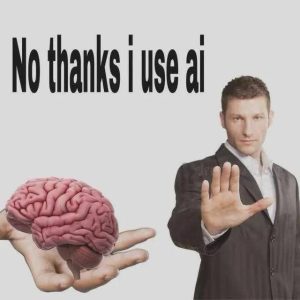

Because I hadn’t designed the solution with them, I went way beyond the scope on my first try, and I missed the most important requirement: long-term sustainability. By failing to think beyond my own capabilities, I created yet another problem.
Solve the problem on paper before you ever think of coding
At the time, that advice had never felt more relevant. I felt deflated because I thought I had wasted my time, but honestly, it changed my approach to information systems. It proved to me that the most innovative solutions will always fall flat if the stakeholders can’t adapt to or maintain them themselves.
THE POWER OF FRIENDSHIP IN CONSTRAINED CONTEXTS
To put it in a single term, designing for people becomes autocratic. Whereas designing with people shifts the power dynamic. When we treat the people who will actually use the system as equals, they are no longer customers, but rather they become another member of the problem-solving team.
Understanding this distinction is especially important when it comes to our group project. Traditional strategy and innovation assume a baseline of capabilities. But how does that translate to the Cape Town context? Not everyone has a stable internet connection or a steady income. So why would a generic enterprise system work in this environment? If you’re not willing to bend the knee to the needs of the people, your innovations will ultimately be rejected.
When looking at how we can use digital platforms to help informal traders integrate into formal supply chains, the answer isn’t to build an app we think could help them. The answer is to listen to the needs of the people and build something modular. This takes into account the uncertainty that comes with this type of trade. It allows traders to adopt only the tools they need to survive and grow, taking into consideration data costs, digital literacy, device capabilities, etc.
What I am trying to say is that strategy shouldn’t be about doing what you believe is best, but rather about allowing the affected to craft their own solutions, as they are the only ones who truly understand what they need. It should be about building a bridge, and you can’t build a bridge without understanding the nitty-gritty. That’s all for this week.
So, WW3 is on the rise. Tell me, how will you apply human-centred design to your bunker? Let me know in the comments.
Song of the week: “Feel Special” by TWICE

The Power of Friendship