

If there is one recurring struggle I’ve faced in my own prototyping, it is the quiet, frustrating realisation that you simply cannot keep everyone happy. No matter the circumstances, there are always competing demands. Stakeholders want flashy, scalable features; developers want clean, rapid deployments, but the end-users just need something accessible, safe, and reliable.

Translating a conceptual solution into a technical design forces a hard collision with this reality. In the rush to build an MVP, we are forced to make strict, sometimes painful compromises.
Reflecting on the strategic and ethical trade-offs of this phase reveals that every architectural decision determines not just what a system can do, but how much vulnerability it exposes.
Often, I look to the gaming industry to analyse strategic disconnects from user needs, but when we talk about the ultimate danger of stakeholder demands, there is perhaps no more sobering case study than Boeing’s 737 MAX (allegedly, of course).

To understand why these design choices were fatal, we have to look at the exact point where physics clashed with business strategy (stakeholder demands) and how software was misused to cover up a hardware problem. The cascade of engineering and strategic failures breaks down into four pivotal compromises.
1. Positioning
Boeing wanted to equip the 737 with newer, more fuel-efficient engines to compete with Airbus. The problem? The 737 was designed in the 1960s to sit very low to the ground so baggage handlers could load it without specialised equipment. The new engines were simply too big to fit under the wings. Instead, it would be more cost-effective to redesign the whole plane, which would be wildly expensive and require pilots to undergo costly simulator training. Boeing decided to move the engines further forward and higher up on the wing.
2. Aerodynamics
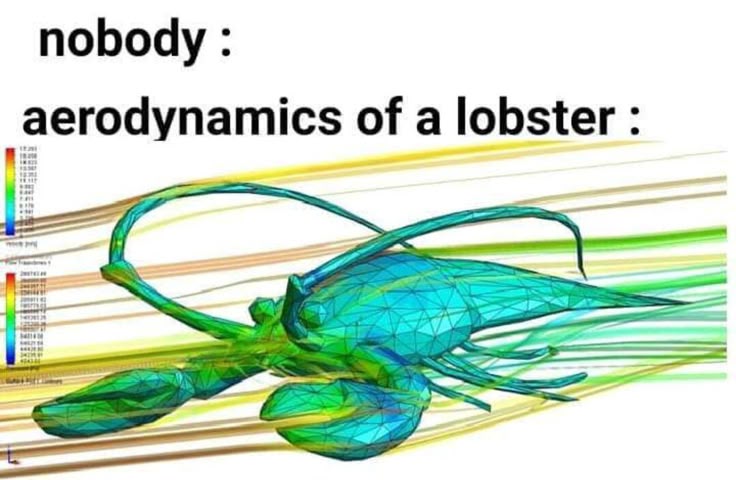
Because the engines were moved forward and up, it changed the plane’s centre of gravity and thrust line. When pilots applied high power, like during takeoff, the position of the engines naturally pushed the nose of the plane up. If a plane’s nose pitches up too high, the wings lose their ability to generate lift, causing a stall.
3. Software
To get the plane certified without forcing airlines to pay for new pilot training, Boeing needed the 737 MAX to feel exactly like the older models. So, instead of changing the physical airframe to fix the pitch-up problem, they wrote a software patch. This was the Manoeuvring Characteristics Augmentation System (MCAS). Its job was simple: if sensors detected the nose pitching up dangerously high, MCAS would automatically turn the horizontal stabilisers on the tail to force the nose back down.

4. Till Failure
This is where the catastrophic systems design failure occurred. The 737 MAX had two Angle of Attack (AoA) sensors, small physical vanes that measure the angle of the nose relative to the wind. Incredibly, engineers programmed MCAS to take data from only one of them at a time.
If that single sensor malfunctioned and falsely indicated the nose was too high, MCAS would activate aggressively, repeatedly forcing the nose down into a dive. Because the pilots were initially not told MCAS even existed, they didn’t know how to properly disable it while the computer continuously fought their physical attempts to pull the plane up.
It was a fatal cascade: a business requirement forced a physical compromise, a very over-the-top example of stakeholder demands/expectations going beyond what is capable. [Video]
Trade-off: Privacy
While most of us aren’t building commercial airliners, the same underlying pressures apply to our own system design. In high-pressure environments, the instinct is to reach for the tools that allow for the fastest deployment. Integrating third-party APIs or leveraging broad, managed cloud infrastructures allows a prototype to scale rapidly.
However, this speed comes with an ethical cost: a loss of absolute data sovereignty. Every time we route user information through an external service, we expand the potential breaches. The trade-off is deciding exactly how much of our users’ privacy we are willing to “outsource” in exchange for convenience.
Protecting the Vulnerable User
When prototyping a system designed to handle highly sensitive states, such as digital medication access or any architecture touching personal financial records. The technical choices immediately transcend functionality.
If we choose to implement complex, multi-layered encryption right from the prototype phase, the system becomes sluggish to build. But if we opt for a lightweight, centralised database to just prove the concept works, we risk treating user privacy as an afterthought. Designing with the user means recognising that true digital stewardship includes protecting users who may not have the technical literacy to protect themselves. Privacy cannot be a feature we promise to patch in later.

Art of Illusion
Strategic choices in data architecture often involve deciding exactly how much information to collect. A robust, data-hungry system can provide deeply personalised insights, which are incredibly valuable from a FinTech or business perspective.
The ethical friction here is the illusion of anonymity. Even stripped of names, granular data points can easily de-anonymise an individual. The trade-off is stark: we must deliberately limit our system’s analytical potential by practising data minimisation, to ensure that our technical design does not inadvertently become a surveillance tool, a stark contrast to Palantir.
Technology is never neutral. Every line of code, hardware specification, and cloud configuration we choose in the prototyping phase defines the boundaries of user trust. True innovation isn’t just about building systems that work flawlessly; it’s about making the deliberate, sometimes painful trade-offs to build systems.
Song of the Week: Bakugan OP