
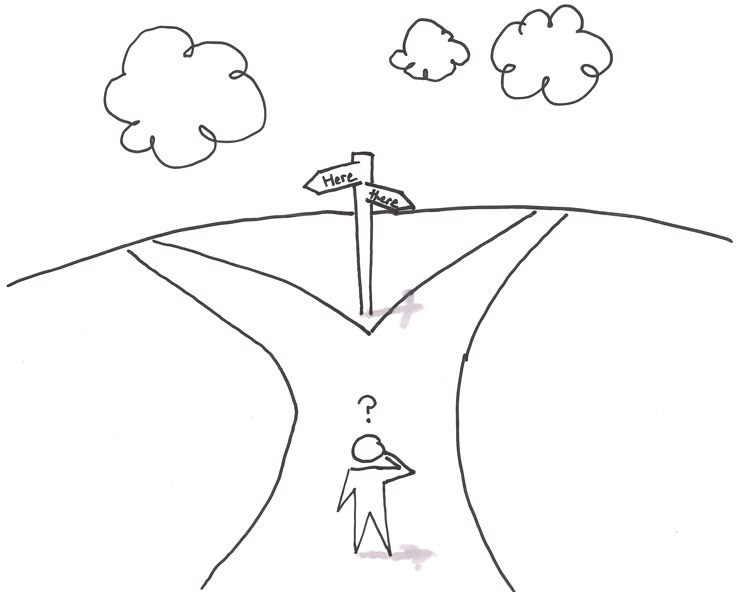
In a world that loves “five-year plans,” the most radical thing you can do as a developer is just start—even when you don’t have all the answers. Over the last few weeks, I’ve been deep in projects that completely changed how I think about building systems. It wasn’t just about the code or the hardware; it was about learning fast, failing safely, and moving forward based on what’s actually happening, not just what I assumed would happen.
This experience shifted how I look at four things: uncertainty, failure, iteration, and constraints.
Brain Rot
By the midpoint of this week, the word ERP had driven me virtually insane. I had just come off a presentation for IFS 735 where we had to pitch the entire architecture of an Enterprise Resource Planning system to a lecturer. Going from that high-level, corporate-spec mindset straight into the survival mode of a hackathon had me on the ropes. The only thing that got me through it was this week’s “Song of the week” entry.
In class, you’re taught to think about “Enterprise Grade” everything. You’re expected to consider the entire value chain. In a hackathon, that mindset is a trap. Although, you have to think of the big picture, getting stuck there for too long prevents you from starting anything. You realise very quickly that the concepts don’t build the product, grit does.

Failure, AI, Easy Way Out
We often see technical failures as setbacks, but they’re actually just diagnostic data. At one point, I hit a wall while trying to build a POST method API in ORACLE APEX. Because the clock was ticking, I thought I’d take the easy way out and lean on AI to generate the solution for me.
I spent over an hour circling the problem, stuck in a loop of errors. Every time the AI fixed it, a new error code would pop up. In a 24-hour sprint, an hour is an eternity. I eventually realised I was wasting more time managing the tool than solving the problem.
I decided to pivot. I closed the tabs, put the AI aside, and did it myself in the simplest manner possible. I had to let go of the perfection I’d been pitching earlier in the week. It didn’t need to be a masterpiece, it just needed to work. Thirty minutes later, it did. That hour of frustration was exactly what I needed to remind me that sometimes, you just have to trace the logic yourself.
One of the defining moments was realising our database choice was fighting us. We hit so many authentication hurdles that we could have stayed stuck until the final buzzer.
But because we kept our architecture loosely coupled (meaning the database layer wasn’t tangled up with the sensor logic or the front end), we were able to swap providers in a single swoop. This wasn’t a failure of the original plan; it was a move patented with desperation. Choosing speed over perfection allowed us to build in a day what traditional perfect planning might have taken weeks to even draft.
Selling The Future
We started the competition with a major handicap: we didn’t have the physical hardware we needed. In a typical environment, this is a showstopper. For us, it became a generative constraint.
Since we couldn’t measure the environment directly, we used maths and external weather data to infer what was missing. We had to defend this move tooth and nail. It’s not that the judges necessarily thought our math logic was superior to having actual hardware, it was that we sold the vision so hard they couldn’t ignore it.
Our selling point wasn’t centred on what we lacked. Instead, we focused on the potential (using the data we did have) to prove what the system would be in the future. We turned a hardware shortage into a story about scalability and data intelligence.

The Power of Friendship
None of this would have worked without the right person beside me. I was lucky enough to work with an amazing Computer Science student who kept us in the game. In these high-pressure environments, you don’t need someone to just help, you need someone to meet you halfway. Having that level of shared ownership and co-creation is the only reason we crossed the finish line.

What I gained from those 24 hours isn’t just a functional repo on GitHub, it’s a life lesson. Strategic experimentation is the difference between luck and progress.
As I look back, the real artifact of the week isn’t the code. It’s the mindset that treats uncertainty as information and constraints as the specifications that drive creativity. In an unpredictable world, the ability to adapt is the only real form of security.
Song of the Week: "Here Lei My" by Bella
As most of my classmates (at least the ones who have my number saved) know, this song goes triple platinum at the slightest inconvenience, and this week was no exception.